Guarding against pandemic fatigue in Singapore's COVID-19 fight
SINGAPORE: As Singapore experiences a rising in COVID-19 customs cases, pandemic fatigue could exist a concern every bit the country one time once more tightens its COVID-xix measures to accost the fasten in infections.
On Sunday (May 16), Singapore confirmed 38 COVID-19 infections in the customs - the highest number of community cases in more than a yr - with xv active COVID-xix clusters.
Last week the Ministry of Health announced that Singapore would get into what it dubbed as "Phase 2 (Heightened Alert)" from May sixteen through Jun 13, with gatherings restricted to groups of ii and working from habitation condign the default for workers here.
All primary and secondary schools, also as junior colleges and Millennia Institute as well shifted to full home-based learning from May 19, subsequently several principal school students tested positive for COVID-19.
As the situation in Singapore becomes more challenging almost a year afterward the country exited from its "circuit breaker" period, how might pandemic fatigue be a factor in stemming the spread of the coronavirus, and what can be done to overcome it?
READ: IN FOCUS: Tackling COVID-19 with targeted measures - the new normal for Singapore?
WHAT IS PANDEMIC FATIGUE?
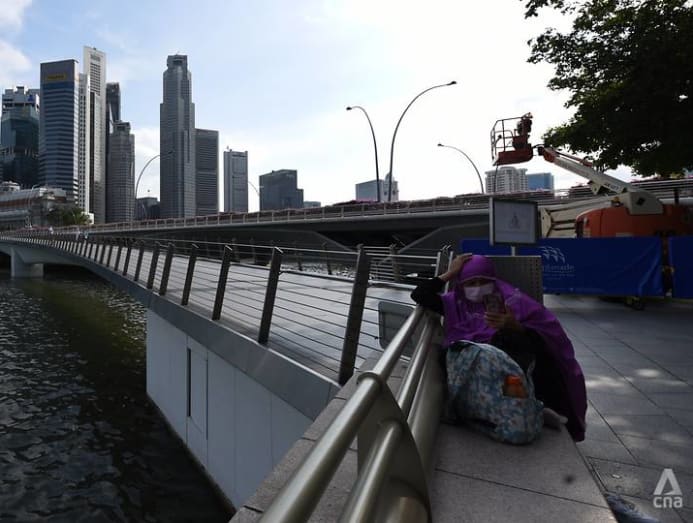
Pandemic fatigue is "a feeling of exhaustion from the changes that the pandemic has brought well-nigh, as well as feeling a sense of dread and irritation with the constant news of the pandemic", equally described by Dr Geraldine Tan, director and principal psychologist at private clinic The Therapy Room.
People here were already feeling fatigued at the start of 2022 - nigh a year since the COVID-19 pandemic hit Singapore - she said, calculation that the introduction of farther restrictions amid an increase in customs cases would only brand the exhaustion "more than sore and painful".
Associate Professor Tan Ern Ser, a sociologist with the National Academy of Singapore, noted that people may take been feeling optimistic, cheers to the "vastly improving" state of affairs in contempo months, only to experience a sudden thwarting as Stage 2 restrictions were reintroduced.
This could lead to feet resulting from uncertainty about the future, likewise every bit inconveniences brought near by COVID-19 precautionary measures, he said.
"It is a real concern every bit it can affect our mental health, peculiarly for those in danger of getting a pay-cutting or worse, losing their job," said Assoc Professor Tan.
"I am having some fatigue as well," infectious diseases skillful Dr Leong Hoe Nam told CNA.
People, especially healthcare workers, are "very tired", peculiarly with all the bad news and the existent risks they face, said Dr Leong.
READ: The Big Read: Frontline healthcare workers pushed to limits by non-cease, never-ending COVID-19 fight
The inability to travel, even to nearby destinations, could also be worsening the fatigue, said Professor Teo Yik Ying, dean of the National University of Singapore's Saw Swee Hock School of Public Health.
Singapore's non-resident population may feel the brunt of the travel restrictions as they are unable to return to their dwelling countries to visit their family and friends, noted Prof Teo.
"For this group of people, I expect the pandemic fatigue will exist felt most acutely," he added.
"I have definitely seen more and more (cases of fatigue) this year and they are not even aware that they are feeling fatigued from it," said psychologist Dr Tan.
Among the signs of pandemic fatigue are irritability, insomnia and lethargy, she said.
She added that those suffering from such fatigue may also experience feeling contemptuous about life and wanting to escape from their family unit members, too as a sense of dread towards piece of work.
READ: Commentary: Five pandemic lessons we have learnt that should tide us over any surge in cases
A survey by Microsoft concluding yr found that almost a 3rd of workers in the Asia Pacific region citing increased rates of burnout since the showtime of the pandemic, stating that the lack of separation betwixt work and personal obligations had negatively impacted their well-being.
The tech giant'southward annual Piece of work Trend Alphabetize - which surveyed more half dozen,000 workers across eight countries - establish Singapore to exist the country with the highest number of workers facing increased burnout, with 29 per cent of respondents experiencing such stress.
WHAT CAN Assist?
As the electric current crisis continues, pandemic fatigue could drag on for another six months to a yr "at the very least", said Dr Leong.
"I think we need time out - and more space," he said.
While Dr Leong acknowledged at that place were no like shooting fish in a barrel answers, he suggested that activities such as exercising, going out for a run, or even blistering for some could help ease the sense of fatigue.
Dr Tan suggested that those experiencing pandemic fatigue adopt healthier habits with work, by setting clear boundaries between piece of work and family unit.
Despite restrictions on social gatherings, people should notwithstanding connect with friends, she said, adding that they should too stay physically active and continue doing the things they enjoy.
Employers should meanwhile cheque in regularly with their staff members and provide opportunities for social interactions inside safe limits, given the current work-from-domicile arrangements, said Dr Tan.
They should also attempt to be in that location for employees who may not be able to clear their difficulties with the current arrangements, she added.
READ: Further monitoring of COVID-19 situation needed earlier any decision on circuit breaker, says Ong Ye Kung
Safety MANAGEMENT MEASURES
A written report by the Globe Health Arrangement (WHO) in Europe noted that such fatigue leads to "demotivation to follow recommended protective behaviours, emerging gradually over time and affected past a number of emotions, experiences and perceptions".
Still, despite mask wearing and safe distancing having been the norm in Singapore for more than a yr now, observers do not expect that people here volition carelessness these or other COVID-19 safe management measures.
Prof Teo of the Saw Swee Hock School of Public Health said people here have been "exceptionally compliant and tolerant" and appeared to have "accepted (that) these measures are here to stay for a while".
"At that place will ever exist a small-scale segment of the population that will exist less compliant, simply mostly, Singapore and Singaporeans have actually done well with respect to complying with the restrictions put in," he said.
Sociologist Assoc Prof Tan said people understand the demand to comply with such regulations - not and then much because they are mandatory - only because they matter for the health, life and livelihood of the population.
Prof Teo said that despite any fatigue, what can be washed to ensure adherence to safe management measures is to continue with "repeated clear and consistent communications" to the public about the importance of keeping to these practices.
READ: Be 'obsessed' with wearing masks properly: Experts urge compliance equally COVID-19 cases grow
The authorities should too maintain enforcement of condom management measures in public spaces and "continue to develop and maintain the trust between Government, employers (and) people, that all possible efforts are in place to ensure that Singapore stays focused on maintaining public health and the economy", he said.
Still, Dr Leong is confident the country will survive the electric current crunch.
"Ane affair is for sure, Singapore will come up out stronger as certain as the sun will rise tomorrow," he said.
BOOKMARK THIS: Our comprehensive coverage of the coronavirus outbreak and its developments
Download our app or subscribe to our Telegram channel for the latest updates on the coronavirus
salernoandlegis79.blogspot.com
Source: https://cnalifestyle.channelnewsasia.com/singapore/guarding-against-pandemic-fatigue-in-singapore-covid-19-fight-176201

Post a Comment for "Guarding against pandemic fatigue in Singapore's COVID-19 fight"